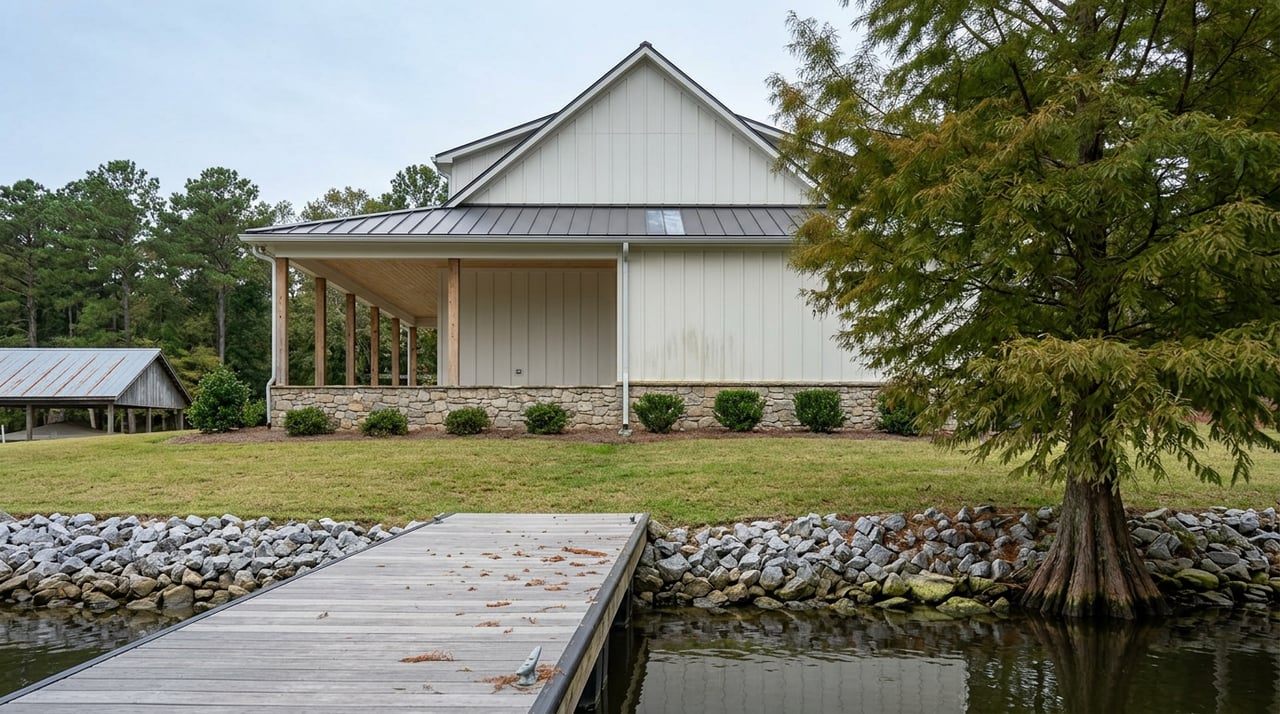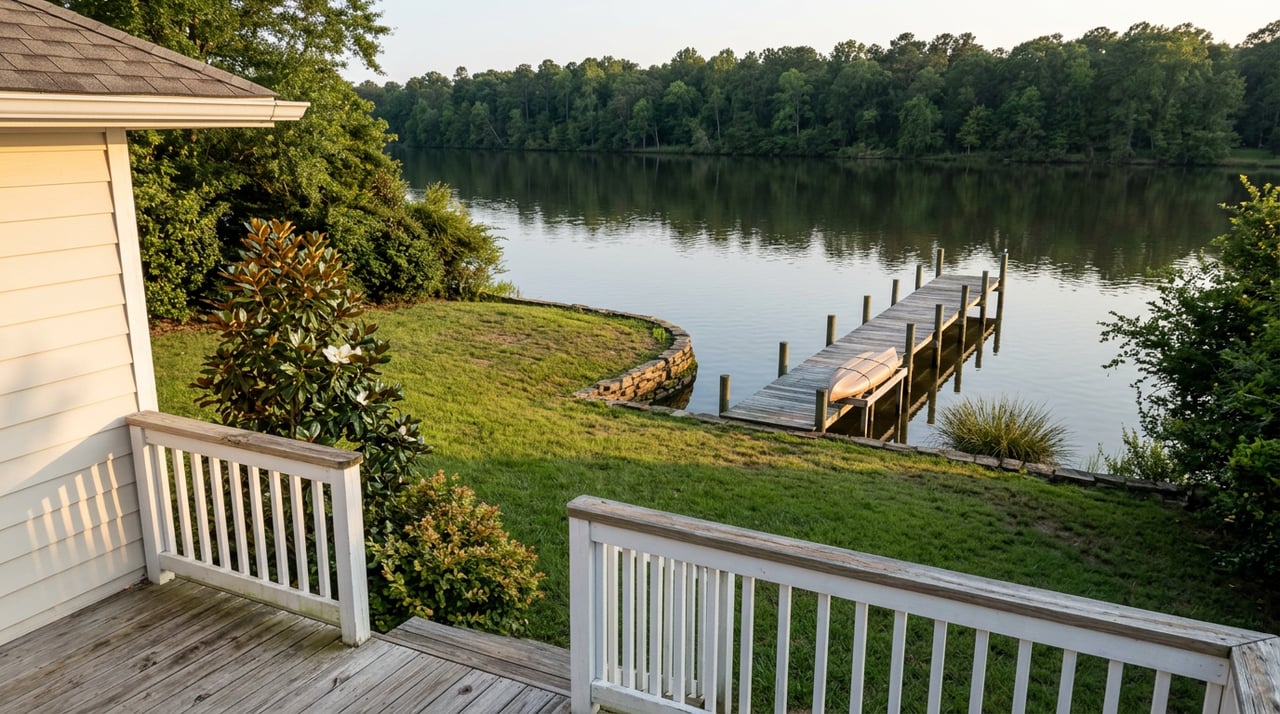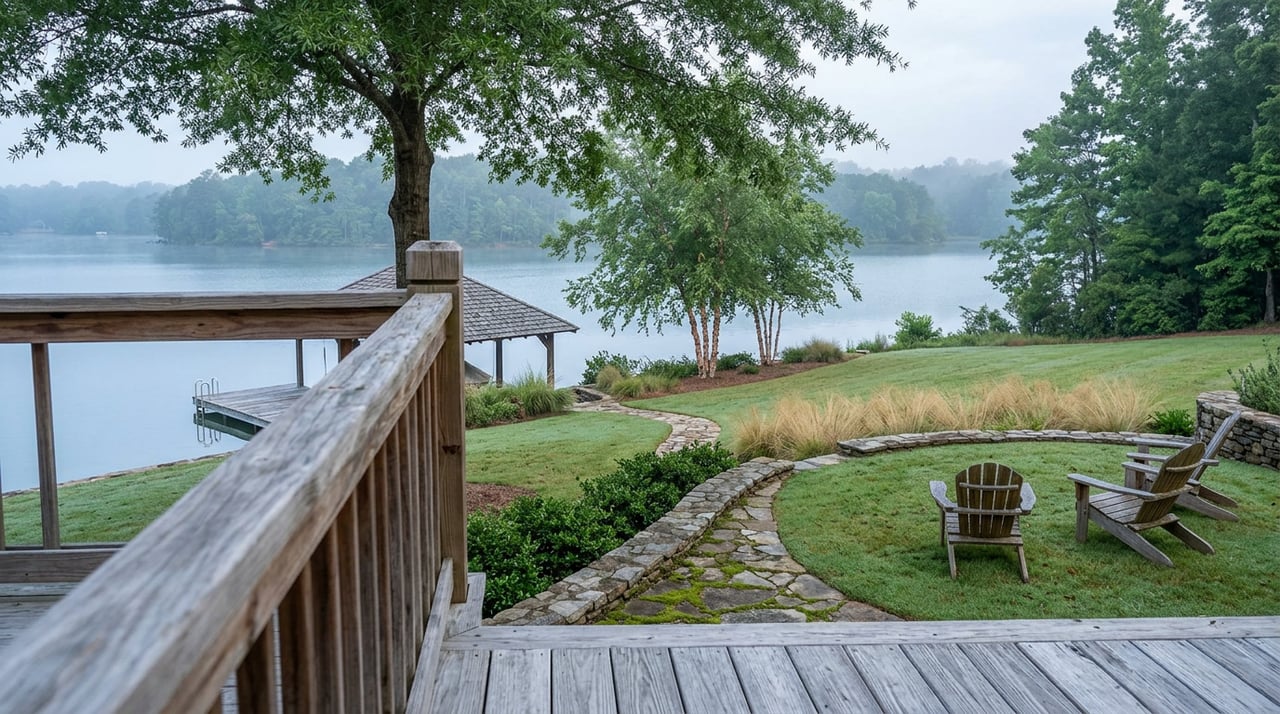
Tour a lake home on the Cedar Bluff shoreline this week and the water will be right where you want it. It's late August, Weiss Lake sits at full summer pool, and the dock the seller is standing on is doing exactly what a dock is supposed to do. That picture is real. It's also temporary, and the temporary part is the one thing a listing photo can't tell you.
In about five weeks, Alabama Power will start easing this lake down toward winter pool, the way it does every year. What's different about this year, and every year since 2022, is how far down it goes and how it got there. Getting those numbers changed took the better part of a decade, and the fix that came out of it doesn't treat every shoreline the same way. If you're shopping Cedar Bluff waterfront right now, that unevenness is worth understanding before you write an offer on a summer photo.
Six Feet Was the Deal for Sixty Years
Weiss Lake is a storage reservoir, not a run-of-river lake, which means Alabama Power has always managed it on a seasonal schedule rather than holding it steady year round. For decades that schedule meant a six-foot drop each fall, starting around Labor Day and lasting until spring, when the lake was pulled down from its 564-foot summer pool to a 558-foot winter pool to make room for winter and spring rain. The system worked as designed. During a major flood event between Christmas and New Year's in 2015, that empty storage space is what kept water from climbing higher over seawalls on the lake's eastern side, including at a spot locals call Dead Boy's Cove.
The tradeoff was six feet of exposed shoreline every winter, in coves all over the lake, for months at a time. Boat lifts sat on mud. Docks that floated beautifully in July were unreachable in January. Anglers who wanted the lake's well known winter crappie fishing had to navigate around channel markers with a lake bed six feet closer to the surface than it had been all summer.
The Decade It Took to Win Three of Those Feet Back
The push to change that math started in 2013, when Alabama Power's Weiss Dam came up for federal relicensing. The utility proposed cutting the winter drawdown from six feet to three. The Federal Energy Regulatory Commission signaled support, but made it contingent on approval from the U.S. Army Corps of Engineers, and the Corps was in the middle of finalizing a basin-wide water control manual for the entire Alabama-Coosa-Tallapoosa river system. When that manual was signed in 2015, Weiss Lake's winter pool wasn't part of it.
That left the issue open for years, and it stayed open because local groups kept pushing it. The Weiss Lake Improvement Association, led by Carolyn Landrem, worked the issue alongside the Cherokee County Chamber of Commerce and a grassroots coalition that called itself Save Weiss Lake. Their argument was straightforward: a higher winter pool meant more coves stayed navigable, better winter fishing access, and stronger property values for owners who were currently living on water that disappeared half the year.
The Corps finally signed a Record of Decision on August 27, 2021, permanently raising Weiss Lake's winter pool by three feet, from 558 to 561 feet, and pushing the start of the annual drawdown from Labor Day to September 30. Southern Company's hydro general manager at the time, Herbie Johnson, put it simply when the decision came down:
"We are extremely pleased that the Corps has given its approval for these changes."
The new schedule took effect in fall 2022. Weiss Lake has now operated under it for four winters.
Three Feet Means Something Different at the Causeway Than It Does Up a Cove
Here's the part that gets lost when the story is told as a single headline number. Three feet isn't a flat improvement across a 30,200-acre lake with 447 miles of shoreline. It's three feet applied to a lake bed that varies enormously depending on where you're standing.
Near the dam and along the causeway that connects Cedar Bluff and Centre, the water is already deep, with a maximum depth at the dam of 62 feet. A dock in that stretch was floating comfortably in January before 2022, and it's floating comfortably now. The extra three feet barely register there because there was never a shortage of depth to begin with.
Move up into one of the lake's narrower feeder coves, off the main river channel, and the math changes completely. Those areas were carved by creeks, not by the dam, and their natural bottoms rise gently toward the shoreline. In a cove like that, three feet can be the entire difference between a floating dock and a mud flat in January. It can also not be enough, if the natural bottom of that cove already sits above the new 561-foot line. The lake-wide fix that took nine years to win doesn't add water where the ground itself is already above the new waterline.
That's the piece a summer showing won't show you. Two docks that look identical in August can behave completely differently in January, and the difference has nothing to do with the house and everything to do with what's underneath the water.
| Near the dam or causeway | Upper feeder coves | |
|---|---|---|
| Typical depth | Deep, up to 62 feet at the dam | Shallow, shaped by the original creek bed |
| Effect of the 2022 change | Minimal, water was already sufficient | Can be significant, or still insufficient |
| Winter dock behavior | Generally floats year round | Varies by cove, some still go dry |
| What to verify before buying | Current elevation near closing | Historical winter photos and cove-specific depth |
What This Means If You're Touring Cedar Bluff Docks This Month
Every showing you take between now and late September is happening at or near full summer pool. That's the most flattering version of the water this lake will show you all year, and it will stay that way until Alabama Power begins the seasonal drawdown around September 30, the new later start date that's been in place since 2022.
Before you get attached to a dock, ask for information that a summer visit can't give you.
- Request winter photos of the specific dock and shoreline, not just marketing shots taken in July.
- Ask whether the property sits near the original river channel or inside a shallower side cove, since that distinction matters more than the address.
- Check the current lake elevation against the posted winter and summer pool numbers before you write an offer, especially if you're touring in fall or winter.
- Ask if the existing dock and boat lift were built to handle a full swing between 561 and 564 feet, or only sized for summer conditions.
- If a seller can't produce off-season photos, treat that as a reason to look closer, not a reason to assume the worst.
None of this means the 2022 change didn't matter. It did. It added real, permanent water to a lake that spent sixty years losing six feet every fall, and it moved the whole timeline back nearly a month. What it didn't do is make every shoreline behave the same way. That's still a property-by-property question, and it's one worth asking before the water drops and answers it for you.
If you're comparing Cedar Bluff waterfront against other stretches of Weiss Lake, or you want the winter history on a specific dock before you make an offer, Tressie Young and the Alabama Lake Homes team can walk the shoreline with you and pull that context together. Start Your Property Search when you're ready to see what a listing actually holds up under, in every season.